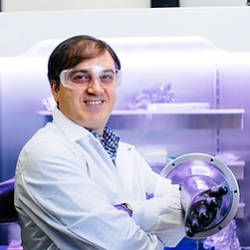
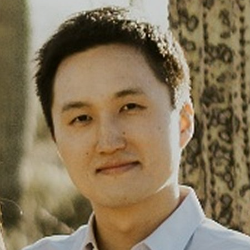
Mohammad Asadi, PhD, Associate Professor, Illinois Institute of Technology Associate Professor Illinois Institute of Technology
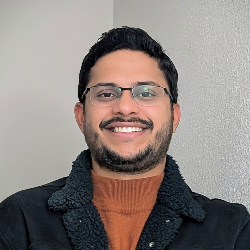
Dr. Asadi joined the Chemical Engineering Department at Illinois Institute of Technology (IIT) as Assistant Professor in 2017. Asadi completed his PhD in Mechanical Engineering at UIC and received his Master of Science Degree in Chemical Engineering from Sharif University of Technology. He spent seven years of working experience in the oil and gas industry before joining UIC. He has authored and co-authored 25 peer-reviewed publications in journals such as Science, Nature, Advanced Materials, Advanced Energy Materials, ACS Nano, and Nature Communications, and has 13 US patents and four patent applications. He has more than 5000 citations (h-index 20) in the area of advanced functional materials, catalysis science, electrochemical energy storage, and energy conversion systems.
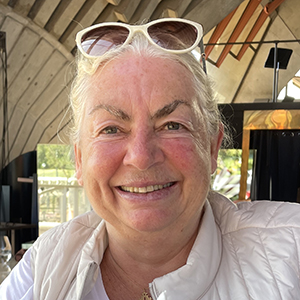
Halle Cheesman, PhD, Program Director, ARPA-E Senior Advisor Premium Advising
Dr. Halle Cheeseman has been working in the battery business for 40 years. From the growth of Alkaline in Europe in the 1980’s, to the emergence of Lithium Ion in the 1990s, to the avalanche of interest in every possible Electrochemical storage system that has dominated the first two decades of this century. After senior leadership positions in the battery industry, Dr. Cheeseman completed his career as a Program Director for the Advanced Research Program Agency for the US Department of Energy (ARPA-E). He now advises investors, institutions and battery ventures.
Dr. Halle Cheeseman has a BSc with honors and a PhD in Chemistry & Materials Science from the University of Nottingham.
Justin Connell is a Materials Scientist in the Energy Conversion and Storage Group of the Materials Science Division, Deputy Director for Science for the Center for Steel Electrification by Electrosynthesis (C-STEEL), and manager of the Electrochemical Discovery Laboratory. He is also a member of the Consortium for Advanced Science and Engineering affiliated with the Pritzker School of Molecular Engineering at the University of Chicago. His current research interests focus on utilizing a combination of vacuum synthesis, electrochemical analysis and spectroscopic tools to understand the bulk and interfacial (electro)chemical processes that govern the stability and reversibility of materials and electrolytes for energy storage and decarbonized manufacturing applications.
Victoire De Margerie, PhD, Executive Chairman, Rondol Industrie SAS Exec Chairman Rondol Industrie SAS
Victoire de Margerie is Majority Shareholder and Executive Chairman of Rondol, a DeepTech SME that develops and markets precision engineering equipment for high quality and low cost drug formulations, food supplements or energy storage components. She has written papers in those fields in scientific journals such as International Journal of Pharmaceutics, Pharmaceutics, Physical Science & Biophysics Journal or SPE Polymers. Her background is in the industry of advanced materials since 1986 and she has held operational & executive assignments in various countries (Canada, Germany, USA, UK, France) until she joined Rondol in 2007. She also has a strong experience in non executive positions (now Boliden and Ivanhoe Electric, previously Arkema, Babcock, Eurazeo, Italcementi, Morgan Advanced Materials, Outokumpu or Norsk Hydro). She was elected an Academician at the National Academy of Technologies of France in 2020.
Danielle Gendron, PhD, Director, QuantumScape Director QuantumScape Battery Inc
Danielle Gendron is the Director of Manufacturing Quality at QuantumScape, where she has spent eight years advancing the company's mission to commercialize solid-state battery technology. She holds a PhD in Chemical Engineering with a specialization in electrochemistry and battery materials. After seven years driving innovation in R&D, she recently transitioned to QuantumScape's Operations organization, where her team applies data science techniques to optimize quality across film, cathode, and cell assembly manufacturing processes. She is the lead author of QuantumScape's first peer-reviewed journal article, which details a high-throughput test method for measuring critical current density in solid-state electrolyte materials.
Tobias Glossmann, Chief Product Officer, Pure Lithium Principal Systems Engineer Pure Lithium
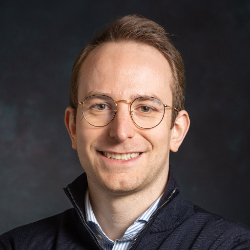
Dr. Tobias Glossmann is a Principal Engineer at Mercedes-Benz R&D North America and works on battery research from material level to vehicle integration for more than 20 years. He is engaged in community education as an officer of the Detroit section of the Electrochemical Society. His current research interests include Li-metal batteries and interfaces in batteries and electrochemical sensors.
Veeral Hardev, Vice President, Business Development, Blue Current Vice President, Business Development Blue Current Inc
Veeral leads Business Development at Blue Current and brings more than 20 years of experience commercializing breakthrough deep-tech technologies. He has secured multiple multimillion-dollar partnerships with global industry leaders including Samsung, LG, 3M, AGC, NSG, ENEOS, and Andersen Corporation.
Prior to Blue Current, Veeral served as Head of Business Development at physical AI startup RoboForce, where he led go-to-market strategy, partnerships, and supported fundraising efforts. He previously spent nine years at Ubiquitous Energy as Vice President of Strategy, leading the commercialization of transparent solar window technology. Earlier in his career, Veeral spent 11 years at Nanosys, Inc., where he held leadership roles across materials development, product management, and business development. Veeral holds an MBA from the Berkeley Haas School of Business and bachelor’s degrees in Materials Science and Economics from UCLA. He is an author on more than 15 granted patents and is a frequent speaker at international tradeshows and conferences.
Gregory Hitz, PhD, Founder & CTO, Ion Storage Systems Founder & CTO Ion Storage Systems
As founder of Ion Storage Systems, Dr. Hitz led development of the groundbreaking multilayer garnet structure at the heart of ION’s battery. Greg now sets the vision for the company’s technology growth, oversees intellectual property and data science efforts, and leads technology roadmapping. He has fostered a culture focused on excellence, integrity, and rapid learning cycles across all activities.Greg has built a world-class team dedicated to delivering no-compromise customer solutions with highly scalable manufacturing. His leadership has also been key in developing new company capabilities and cultivating them into high-performance core competencies. He holds a PhD in Materials Science & Engineering and a bachelor’s in Chemical Engineering from the University of Maryland.
Manas Likhit Holekevi Chandrappa, PhD, Senior Researcher, Nissan Advanced Technology Center Silicon Valley Sr Researcher Nissan North America
Dr. Manas Likhit Holekevi Chandrappa is a Materials Researcher at the Materials Informatics (MI) team at the Nissan Advanced Technical Research Center – Silicon Valley (NATC-SV) and specializes in development and investigation of energy storage materials through atomistic simulation and machine learning tools.
Manas earned his Ph.D. in Nanoengineering from University of California San Diego (UCSD), with a research focus on understanding structure-diffusion relationships in photovoltaic and battery materials using ab initio calculations and machine learning potentials (MLPs). His earlier research focused on halide ion migration in perovskites. Subsequently, his focus shifted towards investigating the stability of interfaces in Li and Li-S solid-state batteries (SSBs). He also contributed to determining the structure of the novel healable S-I cathode which was published in the Nature journal.
In his current role, he continues to leverage his expertise and aid with development of next generation battery materials for Nissan's EVs.
Dr. Raimund Koerver is the VP of Business Development at Factorial Energy, where he leads strategic partnerships, fundraising, and go-to-market strategy for solid-state battery technology in the automotive and aviation industries. Before joining Factorial, Raimund was a specialist in solid-state batteries at BMW’s Battery Cell Competence Center in Munich, where he contributed to advancing next-generation battery cell development for future electric vehicles. With over a decade of experience in next-generation battery technology, Raimund holds a Ph.D. in physical chemistry from Justus-Liebig University in Giessen, specializing in sulfide solid-state batteries in the lab of Prof. Jürgen Janek. His research and technical contributions have resulted in multiple patents in advanced battery technology.
Philip Koppenhofer, GMS Energy Storage Solutions, Sales, IPCO GMS Energy Storage Solutions IPCO
Phil Koppenhofer is Global Segment Manager for Battery solutions, bringing 35 years of experience in process equipment project development across the energy, chemical and semiconductor industries. He holds a BS in Manufacturing Engineering and an MBA in Finance, and offers deep expertise in thermal processing equipment, supported by hands-on experience as a former business owner delivering RFID-based manufacturing tracking and data optimisation solutions.
Bartek Kras, Vice President, Impact Clean Power Technology SA Vice President Impact Clean Power Technology SA
For 20 years, he has been associated with e-mobility industry. He is a specialist in designing and implementing Li-ion battery and fuel cell systems and has managed numerous projects in that field, carried out by the company since the beginning of its beginning. These projects have resulted in the implementation and commercialization of our products all over the world, including for such clients as Citroen, SAM Group, Smith Electric Vehicles, Solaris Bus & Coach, Ursus, Kiepe Electric, Voith, Temsa and ADL. He led research and development projects in international consortiums such as TAILORWELD, TOLPE and KORANET. He is an author and coauthor of a numbers of patents, trademarks and unique technical solutions in area of electromobility, Li-ion batteries, fuel cells and system control. He graduated from the Faculty of Electrical Engineering at Warsaw University of Technology, where he also gained his Ph.D. title, and completed the ICAN Institute management study (Harvard Management Course).
Ping Liu, PhD, Professor and Director, Sustainable Power and Energy Center, University of California, San Diego Professor and Director of Sustainable Power and Energy Center University of California, San Diego
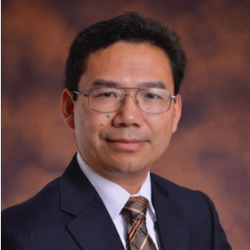
Dr. Ping Liu is Professor of Nanoengineering and Director of the Sustainable Power and Energy Center (SPEC) at University of California, San Diego. His research interests include lithium metal batteries, solid state batteries, and battery safety. Previously, Dr. Liu has led research programs in electrochemical conversion and storage as a staff member at the National Renewable Energy Laboratory and as a manager at HRL Laboratories. Dr. Liu also served as a Program Director at Advanced Research Projects Agency – Energy (ARPA-E) where he drove the development of robust energy storage and thermal management technologies. Websites: http://liugroup.ucsd.edu; http://spec.ucsd.edu
Owen Lu, PhD, Senior Engineer, Ford Motor Company Research Engineer Ford Motor Company
Owen (Zijie) Lu is a Senior Engineer at Ford Motor Company. He has over 10 years of experience researching and developing advanced lithium-ion and solid-state batteries. He also has more than 10 years of expertise in fuel cells and electrochemistry. Lu holds a Ph.D. in Materials Science and Engineering from Penn State University. He has been awarded over 40 patents and has published more than 40 journal publications.
Shirley Meng, PhD, The Liew Family Professor, Pritzker School of Molecular Engineering, The University of Chicago; Vice President of Industry, Nanyang Technological University The Liew Family Professor University of Chicago
Professor Y. Shirley Meng received her Ph.D. in Advance Materials for Micro & Nano Systems from the Singapore-MIT Alliance in 2005, after which she worked as a postdoc research fellow and became a research scientist at MIT. Shirley currently holds the Zable Endowed Chair Professor in Energy Technologies and is Professor of NanoEngineering and Materials Science, University of California San Diego (UCSD). She is the founding Director of the Sustainable Power and Energy Center (2015-2020) and was named as inaugural director of the Institute of Materials Discovery and Design. Professor Meng received the National Science Foundation (NSF) CAREER award in 2011, UCSD Chancellor’s Interdisciplinary Collaboratories Award in 2013, C.W. Tobias Young Investigator Award of the Electrochemical Society (2016), International Coalition for Energy Storage and Innovation (ICESI) Inaugural Young Career Award (2018), American Chemical Society ACS Applied Materials & Interfaces Young Investigator Award (2018), a Finalist for the Blavatnik National Award (2018), International Battery Associations Research Award (2019) and Royal Chemical Society Faraday’s Medal (2020). She is the author and co-author of more than 225 peer-reviewed journal articles, 2 book chapter and 5 issued patents. Professor Meng serves on the executive committee for battery division at the Electrochemical Society and she is the Editor-in-Chief for MRS Energy & Sustainability. She is an elected fellow of the Electrochemical Society (FECS) and fellow of the Materials Research Society (FMRS).
Rana Mohtadi, PhD, Senior Principal Scientist, Materials Research, Toyota Research Institute of North America Senior Principal Scientist Toyota Research Institute of N America
Dr. R. Mohtadi is a Senior Principal Scientist at the materials research department at Toyota Research Institute of North America TRINA and has been in the decarbonization R&D field for over two decades. She has been spearheading and leading research for the creation, design and demonstration of materials for chemical and electrochemical energy storage technologies, including the research of novel battery electrolyte chemistries for liquid and solid-state batteries, and has contributed important advancements in these areas. She has published influential research and has been awarded over 30 patents. Notable recognitions include receiving the R&D100 award (2011) and being named in “40 under 40†by the Automotive and Crain’s news (2014). She was recognized and showed cased in the “We Run on Brain Power†initiative by the State Governor in 2015 as a face of cutting edge innovation in the State of Michigan, USA.
Pontus Nilsson, Director, Battery Processing Systems, AME, Quintus Technologies AB Director, Battery Processing Systems Quintus Technologies AB
Pontus Nilsson is the Director of Battery Processing Systems at Quintus Technologies Americas. In this role, he leads sales, strategy, and technology development for isostatic pressing solutions used in advanced battery components and solid-state battery manufacturing. Prior to joining Quintus Technologies, Pontus built a distinguished career in materials processing and capital equipment, with extensive experience in vacuum and thermal processing technologies. He holds a Master of Science in Materials Technology from the Royal Institute of Technology (KTH) in Stockholm, Sweden.
Michael Sanders, Senior Advisor, Energy, Avicenne Energy Senior Advisor Avicenne Energy
Mike has significant energy storage materials value chain understanding with an emphasis on lithium-ion batteries and systems with 13 years of market knowledge and relationships. Successful program leadership experience with significant business growth in ventures and existing businesses with a proven track record leading mergers and acquisition teams to enter the lithium-ion battery materials market.
He joined AVICENNE in May of 2016 as a Senior Advisor. Since joining the AVICENNE team, Mike has been leading the US AVICENNE activity working with many clients holding strategy workshops, validation of growth opportunities, helping clients establish their growth plans in energy storage, and establishing M&A targets/diligence. Before joining AVICENNE, Mike had a very long career with DuPont, his most recent role was the Global Marketing Director – Energy Storage Venture where he developed significant understanding and insights for the energy storage materials market, device manufacturing, and systems while leading global marketing and customer interface efforts to establish programs to enter the $20B energy storage materials market. Executed strategic and market planning for opportunity evaluation, research, choices, and M&A activity for entry into rapidly growing new market. He has a degree in Chemistry from the University of Delaware and is a member of the Society of Automotive Engineers and Electrochemical Society.
Adrian Tylim, Head Business Development, Natrion Head Business Development Natrion
Adrian Tylim is Head of Business Development at Natrion. He drives battery technology companies and venture investors to convert breakthrough chemistry into commercial-scale, revenue producing businesses. As Head of Business Development at Blue Solutions, he negotiated and executed joint development agreements for solid-state battery technology with several leading global automotive OEMs, the world's largest consumer electronics manufacturer, and a sovereign-backed technology investor. His background spans renewable energy as an engineer, project developer, and business development executive, including work on NASA's International Space Station solar power module team, California wind energy projects, and business development for a global pioneer in utility-scale solar photovoltaic power. He is Founder and Board Member of Shift Energy Holdings, a waste-to-energy developer seeking to eliminate landfill dependency. He taught MBA students the business of renewable energy technologies and sustainable business strategies at California Lutheran University. He holds an MS in Energy Systems Engineering from the University of Arizona and a BS in Applied Physics from California State University, Northridge.
Dominique Vinet, Project Manager, Battery Systems, Product Intelligence, Blue Solutions Project Mgr Battery Systems Blue Solutions
Dominique Vinet has been serving as Project Manager - Battery Systems since October 2023. In this role, he plays a key part in the development of next-generation battery solutions. In the scope of his responsibilities, he supports the product team in the development of GEN4, ensuring proper coordination of activities and the achievement of technical objectives. He is also responsible for product safety, ensuring compliance with applicable requirements and standards. In parallel, he acts as the product team representative during JDA meetings, contributing to strategic discussions and decision-making. Dominique holds a master’s degree in mechanical engineering (equivalent to a five-year engineering degree), complemented by a master’s degree in management, enabling him to combine strong technical expertise with managerial capabilities. From a professional standpoint, he has gained significant experience as a Project Engineer in the development of electric trucks, contributing to innovative projects in the field of sustainable mobility. He has also managed a team of engineers and designers within a consulting firm, further strengthening his leadership and complex project management skills.
Steven Visco, PhD, CEO & CTO, PolyPlus Battery CEO & CTO PolyPlus Battery
Steven Visco is the Chief Executive Officer, CTO, and founder of PolyPlus Battery Company in Berkeley, California, as well as a Guest Scientist in the Materials Science Division at the Lawrence Berkeley National Laboratory. Steven J. Visco currently holds 127 U.S. patents, more than 200 international patents and has authored over 80 journal articles, as well as books, monographs and other publications. Dr. Visco graduated with a B.S. in Chemistry from the University of Massachusetts in 1977 and received his Ph.D. in Physical Chemistry from Brown University in 1982. Dr. Visco then joined the staff at the Lawrence Berkeley National Laboratory as a Principal Investigator in the Materials Sciences Division in 1984 where his research interests have included advanced batteries and fuel cells. Steven Visco co-founded PolyPlus Battery Company in 1991. In 2013 Dr. Visco was selected by the City of Berkeley for a “Visionary Award†for his work in next generation batteries. Steve also serves on the Technical Advisory the CIC Energigune Institute in Miñano, Spain and was awarded the 2011 International Battery Association Award for “Outstanding Contributions to the Development of Lithium-Air and Lithium-Water Batteries.†PolyPlus Battery Company was selected by TIME magazine for its 50 Best Inventions of 2011 Issue, and was selected for a Gold Edison Award in 2012. In May 2015 Dr. Visco was elected a Fellow of the Electrochemical Society.
Eric Wachsman, PhD, Professor & Director, Materials Science & Engineering, University of Maryland College Park Prof & Dir Univ of Maryland College Park
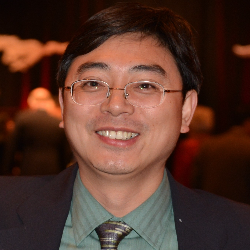
Dr. Eric D Wachsman, Director of the Maryland Energy Innovation Institute, is a Distinguished University Professor and the William L. Crentz Centennial Chair in Energy Research with appointments in both the Department of Materials Science and Engineering, and the Department of Chemical Engineering at the University of Maryland. He received his PhD in Materials Science & Engineering from Stanford University, and his BS in Chemical Engineering from the University of California at Berkeley. Dr. Wachsman is Past President of The Electrochemical Society (ECS), Editor-in-Chief of Ionics, on the Editorial Board of Scientific Reports, Energy Systems, and Energy Technology, and a member of the American Chemical Society, the International Society for Solid State Ionics, and the Materials Research Society. He is a Fellow of ECS, the American Ceramic Society (ACerS), the National Academy of Inventors, and the World Academy of Ceramics; the recipient of the 2017 Carl Wagner Award from ECS; the 2014 Sir William Grove Award from the International Association for Hydrogen Energy; the 2014 Pfeil Award from The Institute of Materials, Minerals, and Mining; the Outstanding Invention of 2013 award from the University of Maryland Office of Technology Licensing; the 2012 Fuel Cell Seminar & Exposition Award; and the 2012 HTM Outstanding Achievement Award from ECS. His research is focused on solid ion-conducting materials and electrocatalysts, and includes the development of solid-state batteries, solid oxide fuel cells, ion-transport membrane reactors, solid-state gas sensors, and the electrocatalytic conversion of CH4, CO2, and NOx, using advanced ion conducting materials. He has more than 280 publications and 40 patents on ionic and electronic transport in materials, and their catalytic properties, and device performance, and to date four companies have been founded based on these technologies.
Andrew Westover, PhD, Staff Research Scientist, Energy Storage, Oak Ridge National Lab Staff Research Scientist Oak Ridge Natl Lab
Andrew S. Westover is a staff scientist at Oak Ridge National Laboratory with a focus on solid-state batteries. Andrew obtained his PhD from Vanderbilt University in 2016 in interdisciplinary materials science and engineering. After graduating he worked at Oak Ridge National Laboratory as a postdoctoral research associate for 1 year before transitioning to a permanent staff position. At ORNL, Andrew leads research programs focused on Li metal for solid-state batteries, the mechanics of solid-state batteries, and ionic glass electrolytes.
Alvin Wu, Research Manager, Research and Development, UL Solutions Manager R&D UL Solutions
Mr. Alvin Wu has been working as a researcher in studying batteries and for more than 20 years, including 5 years in battery industries and more than 18 years with research group of UL. Up to present, Alvin has provided more than 60 technical presentations, professional consulting services and training to international conferences, battery research organizations and industries all over the world. Alvin is the technical leader in handling a number of battery research projects and setting up battery research test facilities in UL Taiwan battery lab. He is the winner of UL 2014, 2016 and 2021 Mark of Excellence awards. Alvin’s strong foundation in battery technology has a foundation from degrees in chemical engineering (BS and MS) from National Taiwan University where he conducted research on solid polymer electrolyte in lithium-ion batteries.
Eongyu Yi, PhD, Director of Battery Technology, Ampcera Director of Battery Technology Ampcera
Dr. Eongyu Yi is Director of Battery Technology at Ampcera, where he leads the development of advanced sulfide-based solid-state batteries. He holds a Ph.D. in Materials Science and Engineering from the University of Michigan and completed postdoctoral research at Lawrence Berkeley National Laboratory, where his work earned an R&D 100 Award. Dr. Yi has authored over 40 peer-reviewed publications and holds multiple patents in solid electrolyte and battery interface technologies. At Ampcera, he drives innovations in electrolyte design, interface engineering, and high-loading electrode architectures, advancing fast-charging, all-climate battery systems for defense, EV, and aerospace applications.
Dr. Petrik Ziebeil is Chief Technology Officer at IPCO Group, where he leads global R&D, test and productivity centers, product management, and the company’s digitalization journey. He began at Fraunhofer IPK in virtual product development, then joined Siemens Business Services as a consultant for collaborative lifecycle management. He later held senior roles at Bombardier Transportation across Europe and served as General Manager Drives & Controls at ABB. Before IPCO, he was CTO of Quintus Technologies AB.