Battery Recycling & Sustainability Summit
Battery Recycling for a Sustainable Energy Transition
11/12/2025 - November 13, 2025 ALL TIMES EDT
As EV adoption and large-scale energy storage systems increase, the need for both sustainable design and the recycling of waste and spent battery materials will grow exponentially. This event will examine the latest advances in battery recycling methods research and technology, safety, market overview and regulatory environments both domestically and internationally by bringing together key stakeholders in the industry, including manufacturers, academic and industrial researchers, recyclers and policy-makers.
Wednesday, November 12
Registration Open and Morning Coffee
Organizer's Opening Remarks
RECYCLING MARKET DEMAND
Chairperson's Remarks
Understanding Global Battery Recycling Market Dynamics: Regionality in Technology, Infrastructure, and Legislation

When discussing the motivations to build out the lithium ion battery recycling industry, the conversation has evolved from the need for global sustainability efforts to the importance of establishing regional critical mineral security. In this relatively nascent and fast-growing industry, tracking global capacity buildout, policy implementation, and technological advancement is essential—and this presentation will outline global considerations for recycling, measured infrastructure buildout, and detail on black mass trading.
Black Mass Markets Update

This presentation will cover black mass supply chains and current drivers and challenges affecting black mass markets. Changing US policy, demand overseas, and battery metals markets will be discussed in their relation to black mass and the battery recycling landscape, as well as how changing dynamics in black mass markets across Asia and Europe affect US markets.
Opening Coffee Break in the Exhibit Hall with Poster Viewing
CIRCULAR ECONOMY
The Critical Mineral War—Urban Mining and the US-China Divide

As the global race for critical minerals intensifies, control over resources like lithium, cobalt, and nickel has become a defining factor in clean energy and national security. China currently leads in refining and recycling, while the U.S. struggles with thin supply chains and dependence on imports. This presentation examines the risks of foreign reliance, the promise of urban mining, and how domestic innovation—led by companies like Green Li-ion—can reshape the battery recycling landscape. Attendees will explore practical strategies to strengthen America’s mineral independence and unlock long-term economic and geopolitical advantages.
The New Resource Race: The Role of Circularity in Ensuring Resilient Critical Minerals Supply

This session explores critical minerals supply chains essential for batteries. We'll demonstrate how circular approaches improve resource efficiency and supply chain resilience. Gain insights into challenges and opportunities for securing sustainable mineral supplies that advance technology while promoting environmental sustainability.
Session Break
CIRCULAR ECONOMY
Chairperson's Remarks
Steve Sloop, PhD, President, OnTo Technology LLC , President , OnTo Technology LLC
Independent Life Cycle Assessment and Battery Recycling: Using LCA to Demonstrate Significant Reductions in CO2 and Particulate Matter

CO2 emissions claims are widespread in the battery materials industry, but not always backed up by independently reviewed data. In this presentation, Ascend Elements describes the life cycle assessment (LCA) methodology used to calculate carbon emissions equivalent (CO2e) and particulate matter (PM 2.5) reductions for its NMC pCAM and recycled lithium carbonate products. With independent review, LCA findings can help demonstrate your product's impact on the net zero economy.
Advancing Battery Recycling: Enabling Partnerships for a Circular Economy

This presentation explores the role of collaboration in battery recycling, focusing on strong cross-sector partnerships that support material circularity. Through real-world initiatives and forward-looking strategies, it aims to inspire greater cooperation across the value chain for a more sustainable and efficient ecosystem.
Refreshment Break in the Exhibit Hall with Poster Viewing
RECYCLING METHODS
Reducing the Risk of Recycling Industrialization: Developments on Direct Recycling and Deactivation

The lithium-ion battery market includes applications to address needs for portable power from consumer electronics to transportation. The service of these applications and recycling of their materials is at the forefront for establishing an economically viable North American supply chain of critical materials refining and manufacturing. The industrialization of this requires processes and designs that are appropriate to the advanced materials and innovative applications in the first place, by design to seize the opportunity for US dominance in the next generation of lithium-ion battery manufacturing. Dr. Sloop will discuss a three-dimensional approach for this: Deactivation, Direct Recycling, and Design.
Direct Cathode Recycling of Li-ion Batteries from Electric Vehicles
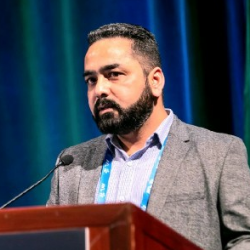
Direct cathode recycling presents a sustainable, energy-efficient solution for recovering end-of-life lithium-ion electric vehicle (EV) batteries by maintaining the structural integrity of cathode materials. While environmentally advantageous, the process continues to face challenges related to achieving consistent material purity. This study introduces a novel separation technique that addresses these limitations, enabling cost-competitive, scalable production of high-purity cathodes with structural, compositional, and electrochemical properties comparable to those of commercially manufactured counterparts.
Efforts to Realize a Direct Recycling Process at the ReCell Center

The ReCell Center has developed a direct recycling process that can recover high purity cathode materials and has developed a wide range of techniques to relithiate those cathode materials. These materials can then have extra nickel added or other processes to increase the capacity or cycle life of those materials. At this stage, the ReCell Center is starting to scale up these processes in a continuous and scalable way.
Networking Reception in the Exhibit Hall with Poster Viewing
Close of Day
Thursday, November 13
Registration Open and Morning Coffee
Organizer's Remarks
RECYCLING METHODS
Chairperson's Remarks
Steve Sloop, PhD, President, OnTo Technology LLC , President , OnTo Technology LLC
Why One Size Doesn't Fit All: Low-Carbon Practices and Real-World Challenges from Hybrid to Direct Recycling

As battery types diversify and sustainability pressures intensify, choosing the right recycling approach is more critical than ever. This talk compares hybrid recycling flowsheets with direct regeneration methods, highlighting their strengths, limitations, and real-world applications. We'll share cross-border insights from facility design to carbon impact reduction, helping the audience understand how to deploy the right solution for the right context.
Recovery of Critical Minerals in Significant End Markets

While global collection and shredding capacity has grown, refinement remains a bottleneck. Momentum Technologies’ proprietary MSX method enables high-margin recovery of critical minerals and rare earth elements (REEs) from lithium-ion batteries, PCBs, stainless steel residue, and mining waste. MSX transforms complex waste streams into high-purity outputs, completing the circular lifecycle and supporting sustainable supply chains with strong economic and environmental returns.
Coffee Break in the Exhibit Hall with Poster Viewing
Pioneering Recycling Technology for a North American Supply Chain: From Concept to Commercialization

This presentation highlights the development and commercialization of an advanced closed-loop battery recycling technology that recovers critical materials from end-of-life batteries without smelting or high-temperature processing. Using a strategic de-manufacturing and hydrometallurgical approach, the system achieves high recovery rates, battery-grade material purity, and reduced environmental impact. This scalable solution supports regional supply chain resilience and positions recycling as a primary source of sustainable battery materials.
Scalable Direct Recycling Techniques for Battery Materials—Bridging Research and Commercial Operation

With battery demand surging, efficient recycling is critical to avoid resource shortages and environmental hazards. ExPost advances a scalable direct recycling method—PRIME (Purification and Regeneration Integrated Material Engineering)—to recover cathode materials and enable closed-loop battery recycling. This presentation outlines recent progress in process efficiency, economic viability, and commercialization pathways for both LFP and NMC, demonstrating direct recycling’s promise for sustainable, low-cost solutions in targeted commercial applications.
Future Scenarios for the LIB Recycling Supply Chain in North America

While the EV transition slows, North America's LIB recycling market is poised for growth. This presentation outlines how the region can prepare for scalable expansion by addressing LIB-specific challenges—such as high cost structures and the lack of localized pCAM production. Referencing advanced recycling practices from other commodities like lead-acid batteries, aluminum, and copper, we explore what a strategically resilient and circular LIB supply chain could look like in the North American context.
Session Break
Panel Moderator:
PANEL DISCUSSION:
Lithium-ion Battery Recycling—Opportunities and Illusions
Panelists:


Refreshment Break in the Exhibit Hall with Poster Viewing
SECOND-LIFE APPLICATIONS
Chairperson's Remarks
Steve Sloop, PhD, President, OnTo Technology LLC , President , OnTo Technology LLC
What is Going on in Maryland? An update on the Commission to Advance Lithium-ion Battery SafetyÂ

A Techno-economic Assessment of Electric Vehicle Battery End-of-Life Pathways: When to Repurpose and When to Recycle

In this session, we share recent research in which we have evaluated the economics of electric vehicle (EV) end-of-life pathways by estimating the maximum amount repurposers and recyclers can pay for used EV batteries. Using a process-based cost model of a UL 1974-certified facility, we estimate repurposing costs, which we integrate with battery degradation predictions to determine purchase prices for repurposers. Combining these results with cost and revenue data for recycling from the EverBatt model, we find that economics favor reuse of LFP, recycling of NCA, and sorting of NMC between repurposing and recycling based on state of health.
Presentation to be Announced
Close of Conference
For more details on the conference, please contact:
Sarah Stockwell PhD
Conference Producer
Cambridge EnerTech
Phone: (+1) 781-247-1816
Email: [email protected]
For sponsorship information, please contact:
Companies A-K
Sherry Johnson
Lead Business Development Manager
Cambridge EnerTech
Phone: 1-781-972-1359
Email: [email protected]
Companies L-Z
Rod Eymael
Senior Business Development Manager
Cambridge EnerTech
Phone: (+1) 781-247-6286
Email: [email protected]